Search News
Hot Articles
Private Label Breadcrumbs: Texture, Color and Shelf-Life Checks
Time
Click Count
A private-label breadcrumb program has a different risk profile from a one-time commodity purchase. The buyer is not only selecting a bag of crumbs. The buyer is choosing a repeatable coating material that may appear under a store brand, restaurant brand, distributor brand, frozen-food label, or regional foodservice identity. Once the product reaches customers, texture, color, package behavior, and cooking consistency become part of the brand promise.
That is why evaluation needs to move beyond a simple sample approval. Procurement teams should look at how the crumb performs in actual coating systems, how well the supplier controls batch-to-batch consistency, whether the color remains suitable after frying or baking, how shelf life is protected in export packaging, and whether documentation can support the buyer's sales channel. A low-cost sample can become expensive if it causes coating fall-off, customer complaints, relabeling delays, or frequent reformulation work.
Start With the Finished Product, Not the Catalog
The first question is not whether a breadcrumb is white, yellow, coarse, fine, or needle-shaped. The first question is what finished food the buyer needs to produce. Chicken tenders, fish fillets, shrimp, croquettes, vegetable bites, and frozen appetizers all need different coating behavior. A private-label fried chicken item may need a visible textured crust and good holding performance. A seafood line may need a lighter color and cleaner bite. A frozen prepared snack may need coverage that survives freezing, transport, and reheating.
Before asking for samples, buyers should define the application, cooking method, target appearance, serving condition, and packaging channel. Will the food be deep fried immediately? Will it be par-fried and frozen? Will it be reheated in an oven or air fryer? Will the pack be sold through retail, foodservice distributors, or central kitchens? These details shape the crumb specification more than a generic product name does.
Texture Evaluation: Shape, Size and Eating Quality
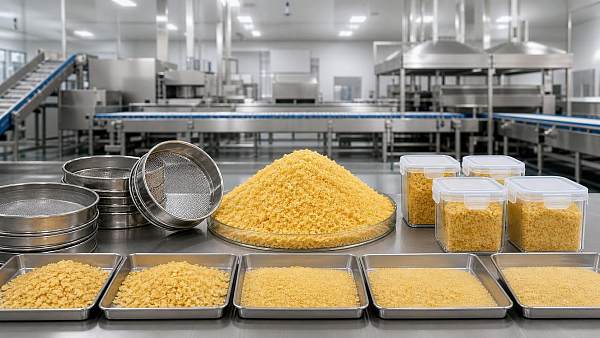
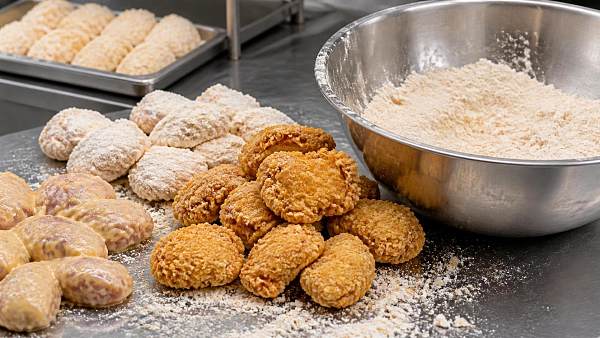
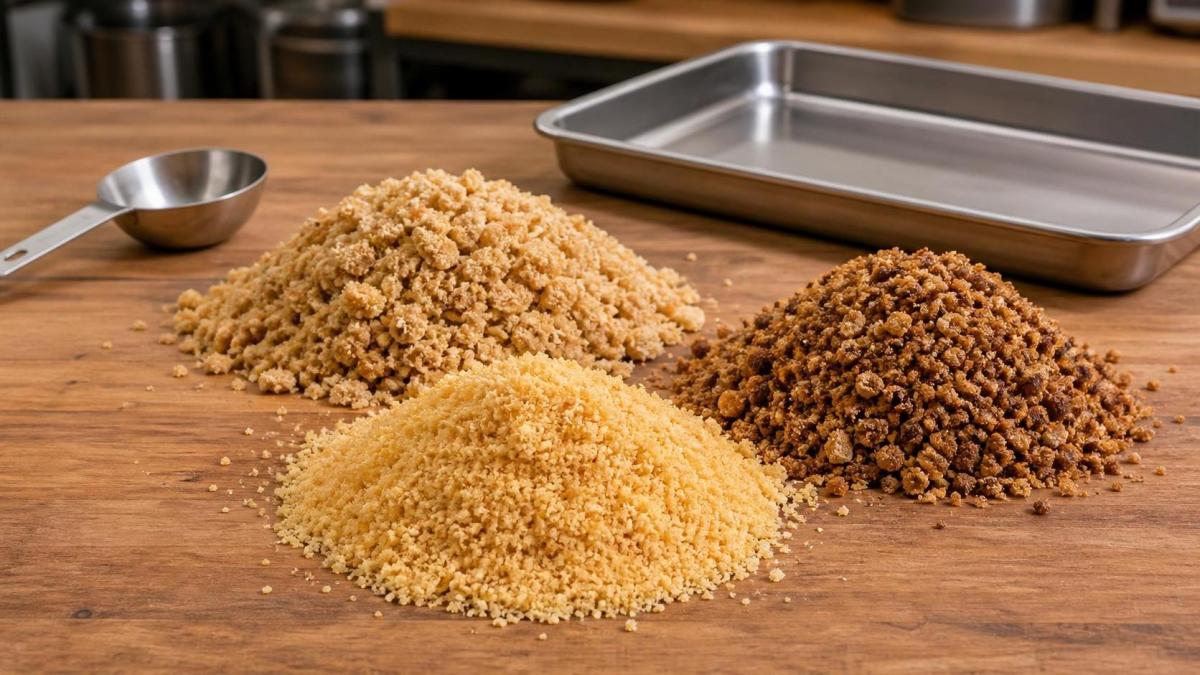
Texture is the most visible performance area, but it is also easy to judge too quickly. A crumb may look attractive in the sample bag and still fail during coating. Buyers should evaluate particle shape, size distribution, dust level, adhesion, surface coverage, and final bite after cooking. For panko-style crumbs, open flakes or needle-shaped particles can create a lighter and more textured surface. Finer crumbs can help fill gaps or create a denser crust, but may not give the same visual relief.
Testing should include the complete coating process: predust, batter, breadcrumb application, cooking, holding, cooling, freezing if relevant, and reheating if required. Texture should be judged immediately after cooking and again after the expected serving or holding period. For foodservice brands, a coating that is crisp for the first minute but softens quickly under normal service conditions may not be acceptable. For frozen retail products, texture after reheating is often more important than the initial production result.
When evaluating Japanese Needle-Shaped Bread Panko, buyers should ask how the crumb structure is controlled, whether the supplier can maintain similar particle distribution across orders, and how the material behaves in both manual and automated breading operations. The right answer depends on the buyer's product and production method.
Color Checks: Raw Color Is Only the Starting Point
Color decisions should be made after cooking, not only by looking at dry samples. White crumbs can help create a clean appearance for seafood, cheese products, and lighter menus. Yellow or orange crumbs can help support a richer fried-food appearance, especially when the product is positioned as seasoned or spicy. But oil temperature, cooking time, seasoning content, batter composition, and sugar level can all change the final look.
Private-label buyers should define an acceptable visual range. That range may include raw color, cooked color, degree of browning, visible flake texture, and surface uniformity. If the buyer already has packaging photography or menu images, sample tests should compare the cooked product against those expectations. A color mismatch between the product and the package image can create avoidable complaints even when the taste is acceptable.
Shelf Life and Packaging Protection
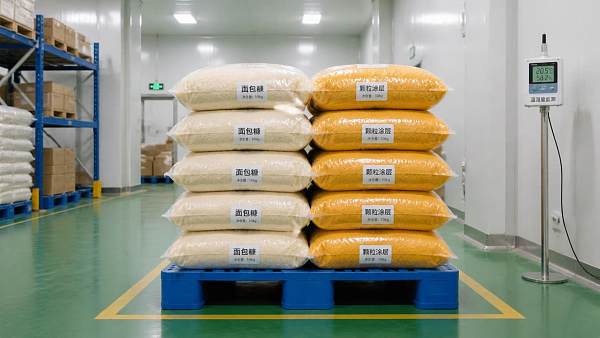
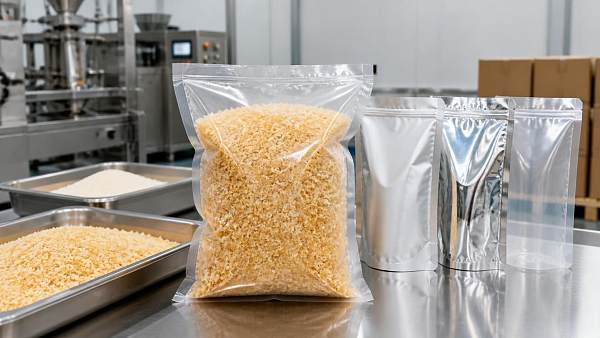
Dry coating materials are sensitive to humidity, odors, and poor storage discipline. Shelf life should therefore be treated as a system that includes formulation, drying control, inner liner, outer carton, sealing method, warehouse practice, and opened-pack handling. For private-label programs, the package may also need buyer-specific labels, barcodes, language versions, pallet markings, and carton strength suited to the destination market.
Ask the supplier how the product should be stored before and after opening. If the buyer plans to repack, relabel, or distribute the crumbs through several warehouses, those steps should be discussed early. Even a good crumb can lose flowability or absorb off-notes if it is exposed to moisture or strong-smelling materials. In quality terms, packaging is not decoration; it is part of product performance.
Supplier Evaluation for Brand Programs
Supplier evaluation should cover more than product appearance. A private-label coating program often requires stable communication among procurement, R&D, QA, packaging, logistics, and sales teams. Buyers should confirm whether the supplier can manage sampling, specification confirmation, artwork coordination, label review, production scheduling, and shipment preparation without losing details between departments.
Documentation matters because different sales channels ask for different proof. Some buyers need ingredient declarations, allergen information, storage instructions, shelf-life statements, packaging details, and market-specific labeling support. A supplier does not need to claim every certification in the world, and buyers should be cautious of unsupported claims. What matters is whether the documentation matches the actual product, destination market, and buyer channel.
Sample Testing Workflow
A good sample workflow starts with clear instructions. Tell the supplier the target food, cooking method, desired color, target texture, pack size, and whether the product will be frozen or served fresh. Request samples that represent normal production rather than hand-selected showcase material. When samples arrive, test them in the buyer's real process and record results in a structured form.
For coating trials, document raw appearance, coating pickup, fall-off during handling, cooked texture, cooked color, oil absorption impression, holding behavior, and operator comments. If possible, compare at least two particle profiles or color options. For private-label programs, the best sample is not always the most dramatic one; it is the one that the buyer can reproduce, package, distribute, and sell with confidence.
Decision Checklist
- Define the target food application and cooking method before requesting samples.
- Test crumb behavior with the actual predust, batter, equipment, and holding condition.
- Judge color after cooking and compare it with packaging or menu expectations.
- Ask for storage guidance and confirm opened-pack handling rules.
- Review packaging structure, label requirements, carton strength, and pallet handling.
- Confirm what documents are available for ingredient, allergen, shelf-life, and export review.
- Use a written approval sheet so procurement, QA, and product development evaluate the same facts.
- Retain approved samples for future comparison when repeat orders are produced.
Common Evaluation Mistakes
One common mistake is approving a crumb based only on dry appearance. Another is testing a sample in a kitchen method that does not match actual production. Buyers also sometimes choose a more textured crumb without checking whether it increases fall-off or waste. In private-label work, small differences become visible because the brand owner has to defend the product in front of distributors and customers.
A second mistake is ignoring packaging until the product is almost ready to ship. Pack size, inner sealing, carton layout, and labeling can affect both product quality and delivery timing. If a distributor needs a specific carton mark or language version, that requirement should be confirmed before production. Clear packaging requirements reduce rework and help the supplier prepare the right materials.
FAQ
What is the first thing to evaluate in a private-label crumb program?
Start with the finished food application. Texture, color, and pack requirements should be chosen according to the product being coated, the cooking method, and the sales channel.
Are larger crumbs always better for coating?
No. Larger flakes can create a more visible texture, but they may need the right batter viscosity and handling process. Smaller particles can improve coverage in some applications. Testing is essential.
How should color be approved?
Approve color after cooking under the buyer's real process. Raw crumb color is useful, but final product color is what customers see.
What documents should a buyer request?
Useful documents may include ingredient details, allergen information, storage guidance, shelf-life statement, packaging specification, and any destination-market documents required by the buyer's channel.
Why is retained sample control useful?
Retained samples give both buyer and supplier a practical reference for repeat orders. They help compare color, texture, and particle distribution if future production looks different.
Editorial Review Note
This article is intended as buyer-facing guidance for foodservice, ingredient sourcing, and private-label teams. It avoids fabricated prices, unsupported performance claims, and invented case numbers. Final publication should be checked against the destination portal's house style before upload.
News Recommendations
 What Hygienic Design Standards Must Machinery Meet for a BRC Audit?
![51a6ab95581761cc26f4318be6520c15]()
Aris Katos
Future of Carbide Coatings
 Is Modified Starch Labeling Different for US Organic Certification?
![51a6ab95581761cc26f4318be6520c15]()
Aris Katos
Future of Carbide Coatings
 Sanitary Stainless Steel Mixing Tanks: Agitator and CIP Checks for Can Filling
![51a6ab95581761cc26f4318be6520c15]()
Aris Katos
Future of Carbide Coatings
 Drainability and Cleanability in Stainless Steel Alcohol Mixing Tanks
![51a6ab95581761cc26f4318be6520c15]()
Aris Katos
Future of Carbide Coatings
 Why Fried Chicken Coating Powder Falls Off During Frying
![51a6ab95581761cc26f4318be6520c15]()
Aris Katos
Future of Carbide Coatings
 When to Choose a Refurbished Sheet Extruder Over New: Cost, Lead Time, and Material Compatibility Trade-Offs
![51a6ab95581761cc26f4318be6520c15]()
Aris Katos
Future of Carbide Coatings
 How Japanese Needle-Shaped Bread Panko Affects Crispness Retention in Frozen Ready-to-Eat Meals
![51a6ab95581761cc26f4318be6520c15]()
Aris Katos
Future of Carbide Coatings
 Supply Chain Considerations for Dehydrated Garlic Powder: Shelf Life, Batch Uniformity, and Custom Grinding Specifications
![51a6ab95581761cc26f4318be6520c15]()
Aris Katos
Future of Carbide Coatings
 Garlic Powder Flavor Profiles and Their Fit in Seasoning Blends
![51a6ab95581761cc26f4318be6520c15]()
Aris Katos
Future of Carbide Coatings
 How Should Exporters Handle Complaints About Modified Starch Texture Inconsistency?
![51a6ab95581761cc26f4318be6520c15]()
Aris Katos
Future of Carbide Coatings
 What Is the Difference Between Xanthan Gum and Guar Gum for Food Thickening?
![51a6ab95581761cc26f4318be6520c15]()
Aris Katos
Future of Carbide Coatings
 Does MAP Packaging Extend Shelf Life Enough to Justify Its Equipment Cost?
![51a6ab95581761cc26f4318be6520c15]()
Aris Katos
Future of Carbide Coatings
 What Documents Do EU Importers Require for Food Emulsifier Shipments?
![51a6ab95581761cc26f4318be6520c15]()
Aris Katos
Future of Carbide Coatings
 Can High-Shear Mixing Replace Traditional Emulsification in Sauce Manufacturing?
![51a6ab95581761cc26f4318be6520c15]()
Aris Katos
Future of Carbide Coatings
 What Is the Annual Maintenance Cost of Freeze-Dried Fruit Equipment?
![51a6ab95581761cc26f4318be6520c15]()
Aris Katos
Future of Carbide Coatings
 Which Packaging Method Best Preserves Dehydrated Vegetables for Long-Haul Export?
![51a6ab95581761cc26f4318be6520c15]()
Aris Katos
Future of Carbide Coatings
 How Should I Verify Food Ingredient Supplier Certifications Before Export Orders?
![51a6ab95581761cc26f4318be6520c15]()
Aris Katos
Future of Carbide Coatings
 Is Cross-Contamination a Risk on Shared Powdered Seasoning Lines?
![51a6ab95581761cc26f4318be6520c15]()
Aris Katos
Future of Carbide Coatings
 What Starch Gelatinization Temperature Range Suits Instant Noodle Production?
![51a6ab95581761cc26f4318be6520c15]()
Aris Katos
Future of Carbide Coatings
 What makes a vegetable chips bulk supplier reliable for distributors?
![51a6ab95581761cc26f4318be6520c15]()
Aris Katos
Future of Carbide Coatings
 How to assess supplier capacity for private-label breadcrumbs
![51a6ab95581761cc26f4318be6520c15]()
Aris Katos
Future of Carbide Coatings
 When does private-label bread crumbs production make commercial sense?
![51a6ab95581761cc26f4318be6520c15]()
Aris Katos
Future of Carbide Coatings
 What should brands verify before choosing private-label bread crumbs?
![51a6ab95581761cc26f4318be6520c15]()
Aris Katos
Future of Carbide Coatings
 Bulk crumb coating storage conditions that protect shelf life
![51a6ab95581761cc26f4318be6520c15]()
Aris Katos
Future of Carbide Coatings
 When does a gluten-free coating texture modifier improve crispness?
![51a6ab95581761cc26f4318be6520c15]()
Aris Katos
Future of Carbide Coatings
 How can coating pickup control reduce rework on breaded products?
![51a6ab95581761cc26f4318be6520c15]()
Aris Katos
Future of Carbide Coatings
 Which packaging best protects Japanese panko from moisture uptake?
![51a6ab95581761cc26f4318be6520c15]()
Aris Katos
Future of Carbide Coatings
 How to design a snack food processing line that can scale efficiently
![51a6ab95581761cc26f4318be6520c15]()
Aris Katos
Future of Carbide Coatings
 Inline mixing or batch tanks: which gives better beverage consistency?
![51a6ab95581761cc26f4318be6520c15]()
Aris Katos
Future of Carbide Coatings
 How Particle Size and Batter Adhesion Affect Fried Chicken Coating Powder
![51a6ab95581761cc26f4318be6520c15]()
Aris Katos
Future of Carbide Coatings
 What Happens When Food Machinery Export Documents Miss a BRC Clause?
![51a6ab95581761cc26f4318be6520c15]()
Aris Katos
Future of Carbide Coatings
 How Should CIP Systems Be Designed for Membrane Lines Exporting to Japan?
![51a6ab95581761cc26f4318be6520c15]()
Aris Katos
Future of Carbide Coatings
 What Are the Export Risks of Zero-Calorie Sweeteners in the Middle East?
![51a6ab95581761cc26f4318be6520c15]()
Aris Katos
Future of Carbide Coatings
 Are Natural Food Colorants Safer for Clean-Label Exports?
![51a6ab95581761cc26f4318be6520c15]()
Aris Katos
Future of Carbide Coatings
 Why Do FSMA Rules Change So Often for Food Processing Equipment?
![51a6ab95581761cc26f4318be6520c15]()
Aris Katos
Future of Carbide Coatings
 Do Starch Gelatinization Machines Need Different Alloys for Halal Markets?
![51a6ab95581761cc26f4318be6520c15]()
Aris Katos
Future of Carbide Coatings
 Can Planetary Mixers Be Exported Without Full 3-A Certification?
![51a6ab95581761cc26f4318be6520c15]()
Aris Katos
Future of Carbide Coatings
 Which Membrane Filtration Specifications Matter in Export Audits?
![51a6ab95581761cc26f4318be6520c15]()
Aris Katos
Future of Carbide Coatings
 Does Spray Dryer Design Need to Follow BRC Hygienic Zones?
![51a6ab95581761cc26f4318be6520c15]()
Aris Katos
Future of Carbide Coatings